It’s been over a week since we’ve posted so here goes a summary of the past eight days.
10-24-08
We discovered a McDonald’s next to our hotel in Varanasi and just had to check out the local menu. No beef, but Chicken Maharaja Mac headed the menu along with several other veg and non-veg (chicken) options including Mexican and Chinese. The smell of vegetable oil and the taste of the fries was 100% North American.
10-25-08
It would be a two day drive to Khajuraho (435 km) so we set sights on an overnight in Rewa. The Maharaja Hotel filled the bill with its one star shining brightly in the garish pink back lighted sign across the front of the building. We have a new hotel rating system based on Motel Six with that chain being perfect at a score of 6.0; according to RA the Maharaja was 1.3!
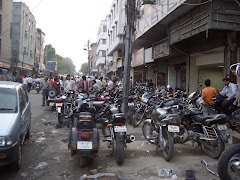
Part of the ride today was on a four lane road which normally would be easier than the one/two lane roads, but that is not always the case. The road surface is usually better on the divided carriageway, but the Indians use it quite differently. For one thing, it is not unusual to meet traffic going the opposite direction in the fast lane! Tractors, motorcycles, cars etc. Whenever the road passes through a town, the town spills out into the road and occupies most of the left lane with tuk-tuks, trucks, market stalls etc. So the top speed on the four lane is still only 80 km/h and sometimes that does not feel safe considering all the stuff on the road and that which may dart out suddenly from either side.
10-26-08
Khajuraho. A small village by Indian standards (pop 20000), but with more than enough temples to go around. Here we see the Kama Sutra in stone as most of the Indo-Aryan structures are loaded with two elements: women and sex. We get a sneak peak the first night we are there by attending the very well done sound and light show. The next morning we enter the grounds again to see the place in m more detail. After a couple of hours of craning our necks and taking lots of pictures we end up in a tree house for lunch at the Blue Sky Restaurant. What a great way to see the temples and eat at the same time. When we want more beer or soda we just pull on the rope that “rings” a wooden bell that beckons our waiter.
We have treated ourselves to a five star resort here in Khajuraho complete with large swimming pool and very attentive staff. Clean towels twice a day, an excellent restaurant, and internet access for 30 rupees/hour. RA has been educating us with her Word-A-Day calendar and one of the young waiters quickly scoops up the word of the day when we leave it at the breakfast table.
Diwali (Hindu festival of lights) is celebrated during our three night stay here. Lights are strung all over the buildings and it reminds us of a snowless Christmas. All the hotels guests are invited to see the fireworks in the garden behind the hotel one night and we oblige. Sweets and sparklers are handed out and we comment on all the butter and oil lamps lining the walls, pool edge, and on small rafts floating in the pool. Soon the fireworks start--what a show!
Glowing embers fall into the crowd, strings of fire crackers explode at our feet, and sometimes the fireworks take a horizontal trajectory instead of a vertical one. We slowly retreat to the other side of the pool feeling safer with a body of water between us and the colorful exploding display. One errant rocket starts a fire in the vegetable garden reminding us of Moses and the burning bush.
10-30-08
Today’s 290 km equals the longest on our Butt Buster adventure and we bed down at the Sun Beam Hotel in Gwalior for a little over US$30/room. We latch on to a wi-fi connection and watch Obama’s thirty minute commercial on You Tube.
10-31-08
The impressive hilltop Gwalior Fort (3 km long) and the Man Singh Palace inside its walls occupies most of the morning before we motored over to the Jai Vilas Palace, home to the Scindia line of maharajas. Tremendous opulence in a land of abject poverty. Incredible India (the current epithet of Indian tourism) never ceases to amaze us; this applies to the historical sites we have seen and to the things we see as we bounce along on our Bullets.
Next stop: Agra and the Taj Mahal.
Sunday, November 2, 2008


Monday, October 27, 2008
Update
We have some information that we were not at liberty to post prior to today. Brian and Harlene were involved in a single vehicle accident on October 7th, our second day on the road, between Corbett Park and Nainital. Brian was transferred to the hospital in Delhi where he is receiving care. We remained with them for three days and at Harlene's urging, continued on. We are in regular contact with her and will see them next week.
Saturday, October 25, 2008
Back to India
Oh what a beautiful morning, oh what a beautiful day! We left Kathmandu early in the morning to avoid the heavy traffic and headed south to the border. It was another glorious day as they all have been with temperatures in the upper 70s and blue skies.
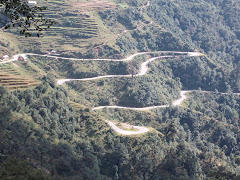
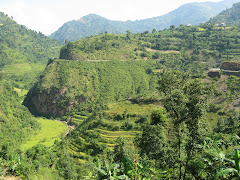
We chose the long way down so we could have one last ride through the mountains. It was the right choice! The road was narrow and winding and there was very little traffic so we were able to relax a little and enjoy the spectacular vistas. It seemed that everywhere you looked, something was growing. The mountain slopes have been neatly terraced to make use of every bit of land and they were all full of lush crops ready to pick. Cabbage, radishes, rice, mustard seed, corn, peppers all grew in abundance and their variety of colour gave the valleys and mountainsides a checker-board look. In the small villages we rode through, people were busy packing vegetables into sacks, husking corn or drying cobs by hanging them in bunches from their eaves. Flowers blossomed everywhere and Ruth Ann, our resident horticulturist, was in her element.
This is one of the highest roads in the Himalayas, summiting at over 8000 feet and often we could see deep down into the valleys where the road snaked its way up and down. It was right out of a motorcycle magazine! At one point, I was leading and pulled over quickly and was able to get a shot of each rider and they rounded the curve into view. If they turn out, Ill post them to the blog.
All good things must come to an end and all too soon we reached the Indian border where we faced a huge traffic jam, broken roads and Indian immigration. The office was a table set up in an alcove just off the street and the officious official took great pains examining our passports and writing in a huge ledger while making small talk leading up to a request for some currency from our countries. Ruth Ann dug up some US coins and even some Canadian coins she had acquired during her visit to Tweed. While I carefully explained what each one (quarter, dime and penny) was and pointed out the portrait of the Queen, he inquired as to whether we had some paper money. Apparently, he was more of an extortionist then a numismatist!
After crossing the border, we had a long, dusty ride on a terrible road which really slowed us down so we didn't arrive in Chopra till dark. Unfortunately, when we got there, all the hotels were full due to some celebration. The next city was 75 kms away. We spoke to our bike rental agent in Delhi and he talked to the hotel, resulting in them putting mats and pillows down on their filthy confere nce room floor where we spent the night for the grand sum of 1500 rupees ($37Cdn).for all of us.
So we're back in Incredible India, as the ads say. And it is: incredibly busy, incredibly dirty, and incredibly entrepreneurial. Everyone is trying to make a rupee and so we are dogged constantly, specially in tourist areas such as we're in at the moment enjoying all the luxuries of a five star hotel to make up for the previous night.
Varanasi is another very holy city, this time for the Hindus where they come to bathe in the Ganges River or die and be cremated on it's banks. We took a row boat to watch the sun rise on the Ganges and saw tea lights floating down the river in the early dawn light. Hundreds of pilgrims lined the shore doing their ablutions among the dead bodies of people and animals. Several big birds were perched on the floating carcass of a dead cow and Ross named it An Avian Dinner Cruise = - (
Respite in Varanasi
10-23-08
We were all up and about shortly after 0600; with no breakfast available until 0900, we decided to depart Chopra, but not until
we made a hotel reservation in Varanasi. An earlier start would also ease the traffic situation. We’d gone about two km when one of the aggressive pedal rickshaws whacked RuthAnn’s saddle bag and sent her sprawling onto the street. She bounced right up with the damage to the bike being a bent right foot peg and a loose mirror. When Mukesh bent the peg back it broke off; soon a new one was mounted and off we went. We pushed hard to get out of the bad pot-holed roads and the state of Bihar which doesn’t seem to have a good stretch of road in it. Once we got to a road that had two lanes, sometimes even sporting a center line stripe, we made pretty good time. We arrived in Varanasi about1600 after covering 225 m. The Hotel Clark Varanasi is five star rated and we feel it is worth every penny we are spending.
1024-08
After sleeping in and taking a late breakfast, we are off to Sarnath to visit one the most important Buddhist sacred sites. It is here that Buddha preached his first major sermon to five followers in 528 BC and thus began one of the world’s great religions. The archaeological park contains many ruins from that time along with many more modern temples and monasteries.
10-25-08
We are in the hotel lobby at 0500 for a ride to the Ganges River to take a boat ride and to watch the sun come up over this polluted but holy river. One of our first sites is a human body floating near the shore, followed by bloated carcasses of a pig and a cow. We think we see the body of a child, but not sure if it real or not as we do see similar figures on shore that appear to be non-human. Many Hindus are bathing and washing clothes in the sewer-laden waters; we see the burning ghats and the newer electric crematorium. After ninety minutes of rowing up and down the river, we leave to the tape recorded warnings about pickpockets, touts, and other dangers that abound. Not only were we pestered by souvenir sellers on land, but also from boats on the river. The most original was two guys with a battery powered tv selling dvds of the river scenes. We decided that our memory was enough--dvd reminders are not necessary.
Friday, October 24, 2008
Over the Mountain and Through the Woods
10-21-08
We got an earlier than usual start to try to avoid the traffic--it worked to a degree and we were soon heading west for about 30 km before taking a left and heading south on the Tribhuvan Highway. This was a one-lane paved road that twisted and turned through the mountains south of Kathmandu. We had some great views of the Himalayas with the road topping out at 2480 meters (8210’). Deep valleys with terraced hillsides presenting many shades of green made for wonderful scenery. The lack of traffic and pollution also added to the enjoyment of the ride and this day is was one of the best of the trip to date. It took us about eight hours to cover the 140 km to Hetauda and the Hotel Seema.
I finally got a handle on what kind of gas mileage we are getting with the bikes: a little over 74mpg!! Remember, though, that we are usually doing less than 60km/h and often times putting along at 30-40 km/h.
We all turned in early as the mountain riding had really worn us out. Little did we know what the 22nd had in mind for us……………….
Kat-man-doo
10-19-08
A leisurely breakfast at KC’s restaurant was followed by quickly arranging a tour of the city and flights to see Everest.
The tour was money well spent as we had a guide and a driver and it felt good to let someone else fight with the traffic. On our 8 hours away from the hotel we saw Swayambhunath (aka The Monkey Temple because of the monkeys that abound there) a large Buddhist temple set on a steep hill overlooking the city, Bodhnath (Boudha) one of the world’s largest stupas (a bell-shaped Buddhist religious structure), Pashupatinath Nepal’s most important Hindu temple and the location of the burning ghats (cremations) on the Bagmati River, and Bhaktapur a step back in time to see a traditionally important small city.
The trip back to the hotel was slow with traffic being gridlocked most of the way. We saw several young women traffic police trying to make order out of the chaos--we did not envy them inhaling all those fumes and dust.
10-20-08
Away at 0600 for the airport and our flight to see Everest. Buddha Air was our host with a petite female first-officer who did all the flying. I gave her an A as she knew how to fly smoothly and not ruffle any feathers in the passenger compartment. After take-off we did a couple of climbing circles to gain altitude out of the Kathmandu Valley. The Himalayas were nice and clear and the flight attendant went up and down the aisle to each seat and told us what peaks we were looking at. We all took turns going forward to get a look out of the cockpit windows. I chatted a bit with the captain and discovered that he had done his flight training in Texas. The aircraft was a Beechcraft 1900D with nearly 20000 hours on the airframe; at one time these were a workhorse on the American commuter scene. We got a great view of Everest towering about 3000 feet above our aircraft.
In the afternoon, some of us took a leisurely stroll down to the Durbar Square chock-a-block full of temples and other historical structures. We also saw Freak Street (Jochne) where the “enlightened” foreigners hung out before Kathmandu grew to be the metropolis it is today.
Flora and Roads
For those who are wondering what we look at along the road--when there is time--flowers and greenery are everywhere. Cana lilies grow in the compounds of the poorest, red and yellow are most common, occasionally salmon, and, less often, a yellow with a delicate salmon stripe. Pothos grows in pots all over and is used to decorate the table in "finer" restaurants. Marigolds are everywhere--in huge clumps in-ground and in patio pots; these are the flower of choice to decorate shrines and, strung into chains, to deck out wedding cars. Bougainvilla--the bright pink--grows in gardens and in some parks. Dahlias, hibiscus, geraniums--usually the orange/red color, zinnias and dianthus complete most garden scapes. What surprised me were the mums we saw growing in Tansen, Pokhara, and Kathmandu--perhaps because it is cooler there. There are many flowering bushes unmknown to me--but they are very beautiful. Banana trees and palm trees add their "greenness" to the picture. All of this competes with the dust and piles of garbage throughout the landscape.
Now for the roads--you probably have a good idea from Jean's and Steve's description
earlier on the blog--but I feel compelled to add my two bits. Potholes and dust slow
us way down, especially when we try to pass a vehicle going 15 klicks per hour and realize that we are headed for a pothole the size of the Grand Canyon or that a bus
with Mr. Tata's name is competing for the same pothole. We give way and regain our spot behind the diesel-fume-spewing-very-slow-moving vehicle, and are happy to be there, until the jockeying begins again. Most of the trucks and buses are colorfully decorated with signs painted on the front bumper proclaiming Slow Drive--Long Life
(Ross is convinced that that is not necessarily true here). Others claim to be Road King or Speed Control--40 kms per hour--which is way too fast. Bicycle rickshaws are small competition, but one plowed into my saddle bag yesterday and I went down. Fortunately I didn't see him coming (he came from the back) and so I was very relaxed and didn't hurt myself--and Mechanic Mukesh made short work of the repairs--a new headlight and rebending the foot peg. To get a real idea of the traffic, imagine any two-lane road that has bicycles, bicycle rickshaws, scooters, motorcycles, some cars--mainly taxis--vans--mainly used as small buses--big buses, big trucks, a few oxen, cows, goats, and dogs as well as people trying to walk in the street or across the street and you have a great picture of driving here. by ra
Subscribe to:
Posts (Atom)